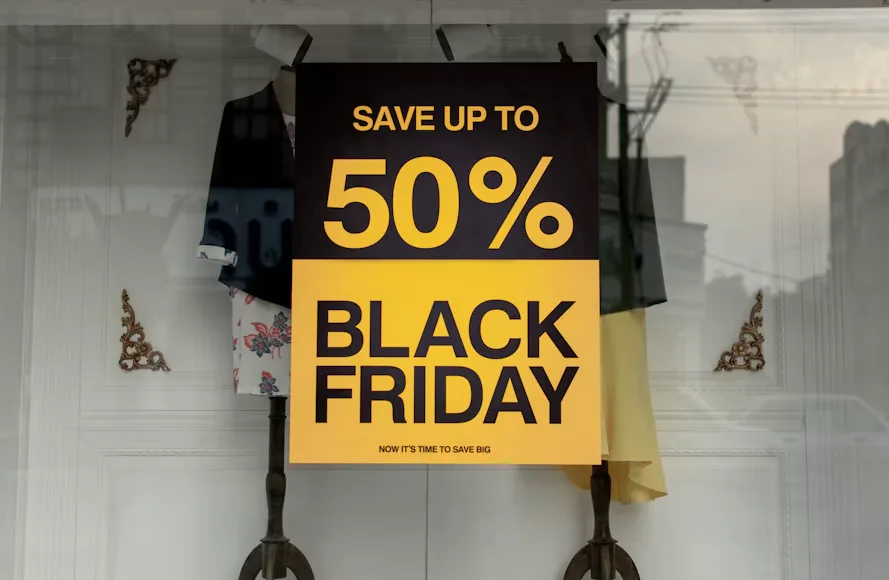
Every year Black Friday and Cyber Monday seem to arrive a little earlier and last a little longer. To some extent they always have some form of trend baked into them. A zeitgeist that seems impossible to escape be it Buzz Lightyear action figures (showing my age) or cosmetics calendars. This year, it’s the thing that all the money in the world has been spent on. It’s LLMs as personal-assistants.
You’ve seen the headlines. AI agents will do your shopping for you! They’ll compare 400 kettles, find the voucher code and check out while you sleep! They’ll go to your daughter’s Nativity and tell her you’re proud of her.

Some people really are giving this a try. A small, brave/reckless (depending on your perspective) group are sending a bot off with a budget and a list, like a flustered mum or dad on Christmas Eve going to Tesco told to buy extra stuffing, do not hallucinate and do not make mistakes! As 404 Media points out, the bots are already getting into scrapes and japes. One venture capitalist’s reservation bot got him banned from Resy (online restaurant reservation service) which leaves you without a table and without a table booking service. This year may be even more awkward for AI users and service workers alike as bots are given new tools to reach out of the data centre and into your life like the humble telephone. Last year Google trialled Let Google Call which will allegedly ring a local shop to ask whether they’ve got an item in stock, which as you’ll know if you’ve tried to phone a shop during peak trading hours is absolutely something that no assistant wants to deal with alongside the usual pressures of service work. Instinct Concierge can phone your dentist and get you onto the cancellation list. Meta has been promoting its Muse agent as able to call businesses for you too (though 404 Media found that in testing, some of those calls were just mechanical turks with calls being made by humans in a contact centre).

So it’s now possible for a person pretending to be a robot to ring a person who feels like a robot, working in a shop and being asked about stock availability on behalf of a person who didn’t want to ring that business themselves. What a world.
Somewhere, a landline is quietly weeping. None of this has reached the UK yet so, for now British shop staff, you only have to deal with the rest of us.

Most people aren’t doing this, though. A Harris Poll for Quad back in April found that only 39% of Americans would trust an AI agent to make everyday purchases for them. Most people will do what they’ve always done and that’s enjoy the experience of shopping, whether that’s Arnie in Jingle All The Way engaging in open combat to find a turboman doll or crashing out with 23 open tabs, adding four things to a basket, getting distracted halfway through by social media and then closing the tab only to wake up on Tuesday having bought almost nowt. Only to do it all again!

Is there advice here? Yeah. Plan for both. My dog, my GOAT, the absolute legend, Cory Doctorow argues that many retailers will block shopping bots, because bots are very good at spotting drip pricing and junk fees, and a lot of shitty and unscrupulous sites are relying on those to squeeze maximum money out of you this festive season. If you want an alternative to this way of treating customers, get in touch.
But there’s the AWIP lesson to be learned there isn’t there? If prices, stock, delivery and returns could survive a sceptical read by a pedantic robot with nothing but time and pedantry on their hands, they’d survive being read by a sceptical human. Being effectively bot-readable means being honest and transparent and making sure your structure is readable too.
A bigger problem tho… Nobody believes anything any more
Shoppers have spent the last 2 years looking at product photos and counting the fingers on the model. Their social feeds have been filled to the brim with generated images that aren’t real and can’t be real but sit right in the uncanny valley until you REALLY pay attention. They’ve read slopped up descriptions written by a toaster with delusions of grandeur. They’ve seen a jumper with three sleeves and thought, “well… It would be warm.”. They have read the news articles about it going wrong.
404 Media reported on scammers selling seeds for gorgeous AI-generated flowers shaped like animals. The flowers do not exist. What you get is either regular seeds or sometimes just nothing. It has never been easier, faster or more profitable to scam vulnerable people on the internet.

As Doctorow puts it, “every heretofore useful button now summons a useless AI genie.” So people are tired, they’re wary and half of shoppers in Criteo’s global survey say misleading information is one of their main worries about AI. Trust now gets checked every time someone lands on a page or interacts with your brand.
Some good news is that trust is cheap to build if you’re actually a benevolent actor. Here’s how I’d do it:
- Show the real thing. Use real photos of a real product, ideally taken by a real customer in a real setting. What we might have considered ‘budget’ or ‘unprofessional’ is now powerful and authentic. Shot on an iPhone with less than perfect lighting in someone’s messy kitchen? Hell yeah. This exists.
- Put humans in the loop. If AI wrote it or made it you need a person to check it, edit it and curate it before it sees real people. Not only does this protect you from hallucinations and invention, but it’ll literally lead to better, snappier and smarter copy.
- Be boring about prices. You do not need to be a hack on this one. No made-up “was” prices or countdown timers counting down to nothing. Compliance and regulatory bodies can and will fine you directly now and they are not feeling very Christmassy.
- Make delivery and returns obvious. Not in a footer or PDF. Right there on the page.
- Show there are still people working here. Give real names and faces and ways to ask questions and get replies from someone. I wouldn’t recommend plugging in an AI agent and pretending it’s a real person. Be explicit if it’s automated and if it’s real.

So… what?
The robots might do a bit of shopping this year. Do not mistake the zeitgeist for the actual real audience of people like you and me. Struggling with real problems. Balancing costs and expectations. Worrying about whether the person will get the gift in time, and if they’ll like it. As for bots… Give them honest data and wave them through, but the people paying for things are still people and they’re more sceptical than ever. They’re not being difficult but they’ve just seen their 20th six-fingered model today and they’re getting very, very tired.
Be the shop that’s obviously real and still here. It’s the best offer you can give anyone this Black Friday and it doesn’t need a discount code or 30 million tokens.
Power to the Users, Jon
This piece first went out to the Another Web is Possible newsletter in November 2026. Subscribe here to get it in your inbox.

Jon Crowder runs Another Web Is Possible.
Sources
- There’s a 100% Chance AI Agents Are Already Ruining the Internet, 404 Media, 15 September 2026
- Google Wants to Call Local Businesses With AI to Find Item Availability For You, Droid Life, 25 November 2025
- AI agents can now make phone calls for you, WFMD, 3 October 2026
- Meta Tests Muse AI Agent Calls That Are Actually Made By Humans in a Call Center, 404 Media, 22 September 2026
- 75% of Americans say they would lose trust in AI shopping if results were sponsored, Quad and The Harris Poll, 13 April 2026
- Agents vs ecommerce, Cory Doctorow, Pluralistic, 28 October 2026
- Scammers Sell Seeds for Exotic AI-Generated Flowers That Don’t Exist, 404 Media, 30 June 2026
- The AI fatfinger economy has come for my receipts app, Cory Doctorow, Pluralistic, 4 November 2026
- Black Friday and year-end shopping trends 2026: What Criteo’s latest survey reveals, Criteo, 22 October 2026