People search for "what is hall of shame", "deceptive design hall of shame" and, my favourite, "hall of shame artinya" (Indonesian for "meaning". Shout out Indonesia!) and they land on our Hall of Shame, where we build working copies of manipulative website patterns so you can feel them happen to you.
What the Hall doesn't have is a list of what each pattern is called, what it looks like in the wild and whether it's merely rotten or actually illegal, so this is that list.
Where the names come from
"Dark patterns" is a term coined by Harry Brignull in 2010. He now refers to them as deceptive patterns and keeps a catalogue at deceptive.design. Regulators, late to the party with how to regulate digital commerce, have since built their own lists. The CMA published a taxonomy of 21 online choice architecture practices in April 2022 and the US Federal Trade Commission's staff report Bringing Dark Patterns to Light came later that year in September, covering tactics such as disguised ads, obstruction, hidden terms and privacy manipulation.
The names below are the common ones. Different lists may be different.
The patterns
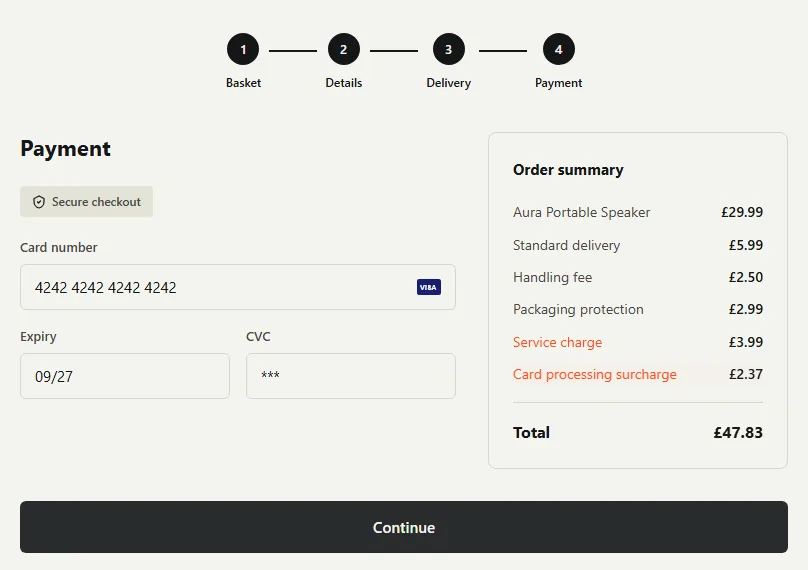
Drip pricing
Showing a low headline price and adding compulsory fees (booking, service, delivery, "admin") as you go.
Illegal in the UK since 6 April 2025 for mandatory fees under the Digital Markets, Competition and Consumers Act. This might have been most keenly felt by users by ticketing websites where your advertised ticket price was £50 and after fees you were paying closer to £60. The CMA fined a London gym chain £45,000 for leaving out its joining fee (Unreal deals has the details). See it happen: Creeping Costs.
Fake urgency
Countdown timers, "sale ends tonight" and "deal of the day" claims that simply aren't true. The CMA fined Wayfair £4.8 million in October 2026 for "deals" where the price didn't actually change after the deal timer expired.
It isn't only a UK concern. In May 2025 EU consumer authorities told Shein that its countdown timers, which kept resetting, were among the practices breaking EU consumer law.
Fake scarcity and popularity
"Only 2 left", "14 people are looking at this". Fine if true and accurate. The big hotel booking sites promised the CMA in 2019 to stop "giving a false impression of the availability or popularity of a hotel".
Pre-ticked boxes and "sneaking" into the basket
Extras, insurance or "donations" added unless you notice and explicitly remove them. The CMA's ruling in the Appliances Direct case was "Pre-ticked boxes and other forms of automatic opt-in are not allowed."
Confirmshaming
Wording the "no" option in a way designed to make you feel bad for turning it down. Explicitly trying to 'hack' conflict avoidance. "No thanks, I'd rather pay full price." See it: Guilty or Charged.
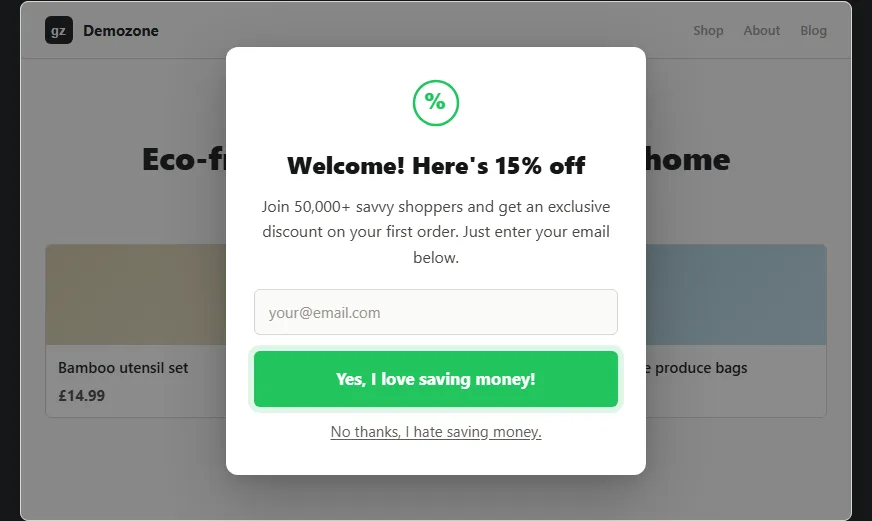
It's not illegal, but it is a shitty thing to do. Be better.
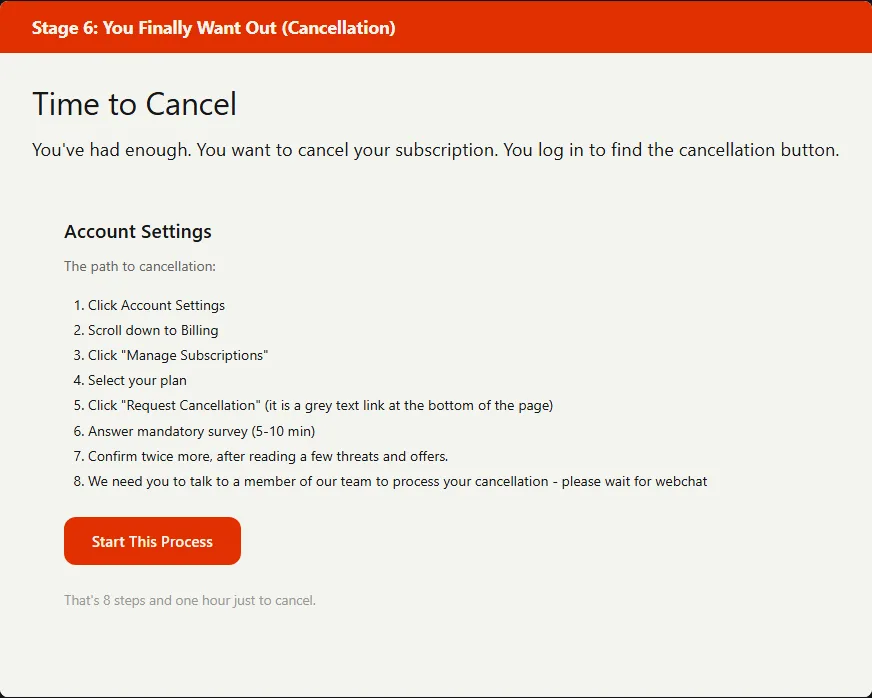
Roach motel (hard to cancel)
This is an American name for this. I prefer the "Retention Mouse Trap" for British audiences as we don't really get cockroaches here. Anyway, the mechanism is clear... Easy to get into, hard to get out of. One-click sign-up, cancellation by phone call only or a complex maze of "are you sure?" screens.
See it: Retention Mouse Trap.
Manufactured consent
With respect to Ed Herman and Noam Chomsky, this is best seen as 'unbalanced consent options'.
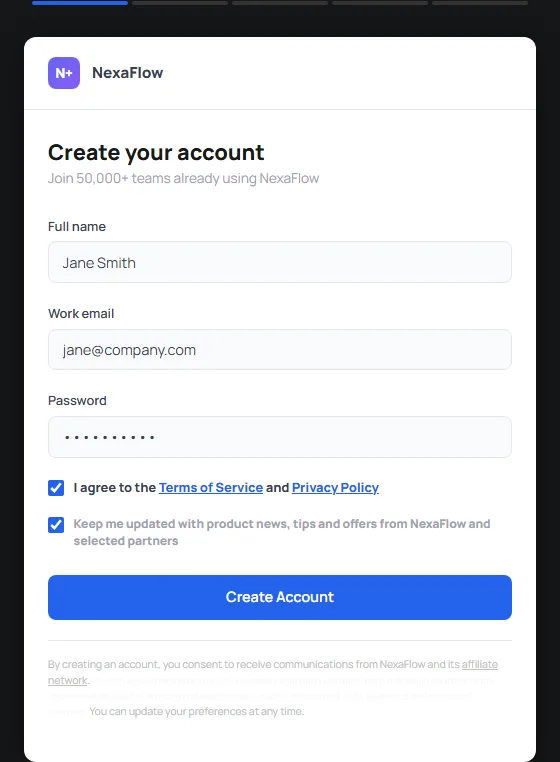
Bundled permissions, pre-checked marketing boxes, trick questions with double negatives, consent banners that have "accept" as a button and "reject" as a complex, multi-screen scavenger hunt.
See it: The Consent Factory, and our piece on cookie consent theatre.
Gamified pressure
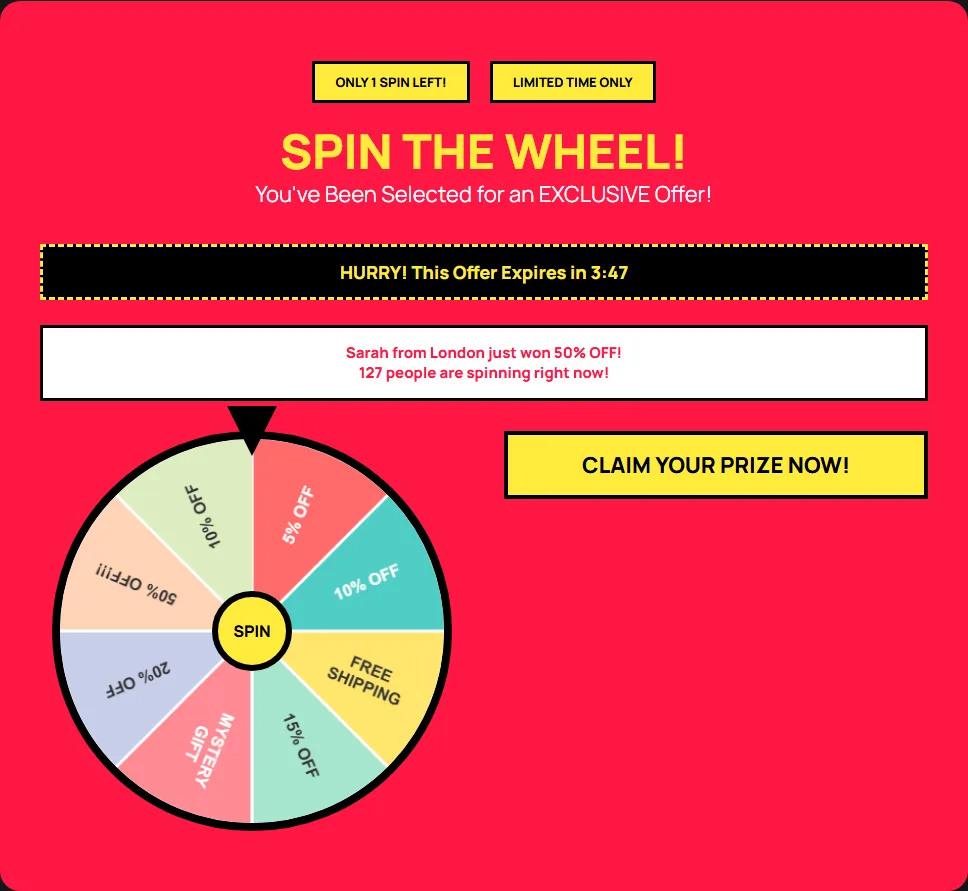
This is done everywhere but it's most commonly the domain of the Chinese owned and operated eCommerce app, so Temu, Alibaba, Shein etc. The casino-ification of the online shop.
Spin-to-win wheels, scratch cards, mystery discounts etc that are explicitly designed to get you to buy something you otherwise wouldn't have wanted to (out of a fear you'll lose your 'winnings') or give over your email for a "game" with fixed odds.
EU consumer authorities found Temu in breach of consumer law in November 2024, and its spin-the-wheel promotions were among the practices they named.
See it: Wheel of Misfortune.
Disguised ads
Adverts made to look like content, search results or navigation. One of the FTC's named categories.
Nagging
Asking again, and again, until you give in. Notifications, pop-ups, "turn on notifications?" on every visit.
Misdirection
Design that pulls attention to the option the business prefers: a huge bright "accept" next to a small grey "manage options" link.
Price comparison prevention
Making it hard to work out the real price per unit, per night or per person, so you can't compare.
Surveillance pricing (sold as "dynamic" or "AI-driven" pricing)
A price set for you individually, based on the surveillance data a company holds about you. You'll see it sold as dynamic pricing, personalised pricing or AI-driven pricing. The US Federal Trade Commission calls it surveillance pricing, which is the accurate name.
It's particularly bad in apps, which can track your data over time. When the FTC looked at the companies that sell this technology, its staff reported in January 2025 that details like your precise location, your browser history, your mouse movements and what you left unbought in a basket can be used to show different people different prices for the same thing. Those companies had at least 250 clients between them, from grocery shops to clothing retailers.
The best-known example is Uber. In 2016 its head of economic research said on a podcast that riders whose phone battery was about to die were more willing to accept surge pricing, which is something the app can tell about you. He also said Uber didn't use that to set prices. Regardless of if you believe Uber doesn't do it or not, this does show they've thought about it, could do it at any time and also what the data makes possible. An app that can tell when you're over a barrel and could squeeze you accordingly.
It isn't only prices, either. The same trick can be used on wages. A Roosevelt Institute report on gig nursing apps in December 2024 found nurses bidding against each other for shifts and two nurses at the same hospital being offered different pay for the same hours in the same job. It warned that the apps may set pay on what they know about a nurse, including how much credit card debt they have. Cory Doctorow, writing about it here. To put it much more bluntly... The more you owe on your credit cards, the more desperate they'll think you are and the lower the wage you could be offered.
It's looking like this will increasingly be cracked down on, because it's almost always bad for the consumer. Very, very rarely is it used benevolently by a company saying "this person could probably do with paying a bit less, so they can pay a bit less". It is overwhelmingly used to extract more money from an individual, based on the surveillance data held about them.
New York already makes businesses disclose when a price was set by an algorithm using your personal data. Maryland's ban for food retailers and delivery apps came into force on 1 October 2026, New Jersey has signed one into law that comes into force in August 2027 and the FTC proposed an enforcement policy on undisclosed personalised pricing earlier this year in August (Sidley's summary is a good one).
The UK has nothing that specific yet, but legislation here does tend to echo what's happening on the other side of the Atlantic or in Europe. The nearest UK example is the Oasis ticket sale, after which Ticketmaster gave the CMA undertakings in September 2025 to tell fans 24 hours in advance when tiered pricing is being used.
Is it illegal, or just bad?
It depends where you are and exactly what you did, and I'm not a lawyer nor is this legal advice.
Roughly, in the UK: anything that misleads people about price, availability or what they're agreeing to is risky under consumer law and the CMA can now fine businesses up to 10% of global turnover for breaches.
Consent dark patterns run into data protection law as well as consumer law.
Some patterns (nagging, misdirection) are mostly just unpleasant and risk reputational damage, until they are used to coerce someone to agree to something they wouldn't otherwise agree to.
A useful guide I like to have here is whether you'd be comfortable explaining the technique to a customer's face.
If not, don't ship it, and definitely don't A/B test it to find out how well it works, because putting it into production may well get you sued.
Checking your own site
We built a free deceptive design self-audit that walks through these patterns on your own site, and a cookie banner ethics scorer.
If you'd rather a professional opinion then a deceptive design audit is something we offer.

Jon Crowder runs Another Web Is Possible.
Sources
- Deceptive Patterns, Harry Brignull
- Online Choice Architecture: How digital design can harm competition and consumers, Competition and Markets Authority, 5 April 2022
- Bringing Dark Patterns to Light, Federal Trade Commission staff report, 15 September 2022 (summary on deceptive.design)
- Hotel booking sites to make major changes after CMA probe, Competition and Markets Authority, 6 February 2019
- Drip pricing ban: new rules now in force, Boyes Turner, 2025
- FTC Surveillance Pricing Study Indicates Wide Range of Personal Data Used to Set Individualized Consumer Prices, Federal Trade Commission, 17 January 2025
- Uber says you're willing to pay more when your phone is dying, Engadget, 20 May 2016
- From Disclosures to Prohibitions: The New Legal Landscape on the Use of Consumer Data for Personalized Pricing, Sidley Austin, 26 October 2026
- Ticketmaster: consumer protection case, Competition and Markets Authority
- Shein accused of breaking EU law with manipulative sales tactics, Euronews, 26 May 2025
- Uber for Nursing: How an AI-Powered Gig Model Is Threatening Health Care, Katie J. Wells and Funda Ustek Spilda, Roosevelt Institute, 17 December 2024
- Nurses whose shitty boss is a shitty app, Cory Doctorow, Pluralistic, 17 December 2024